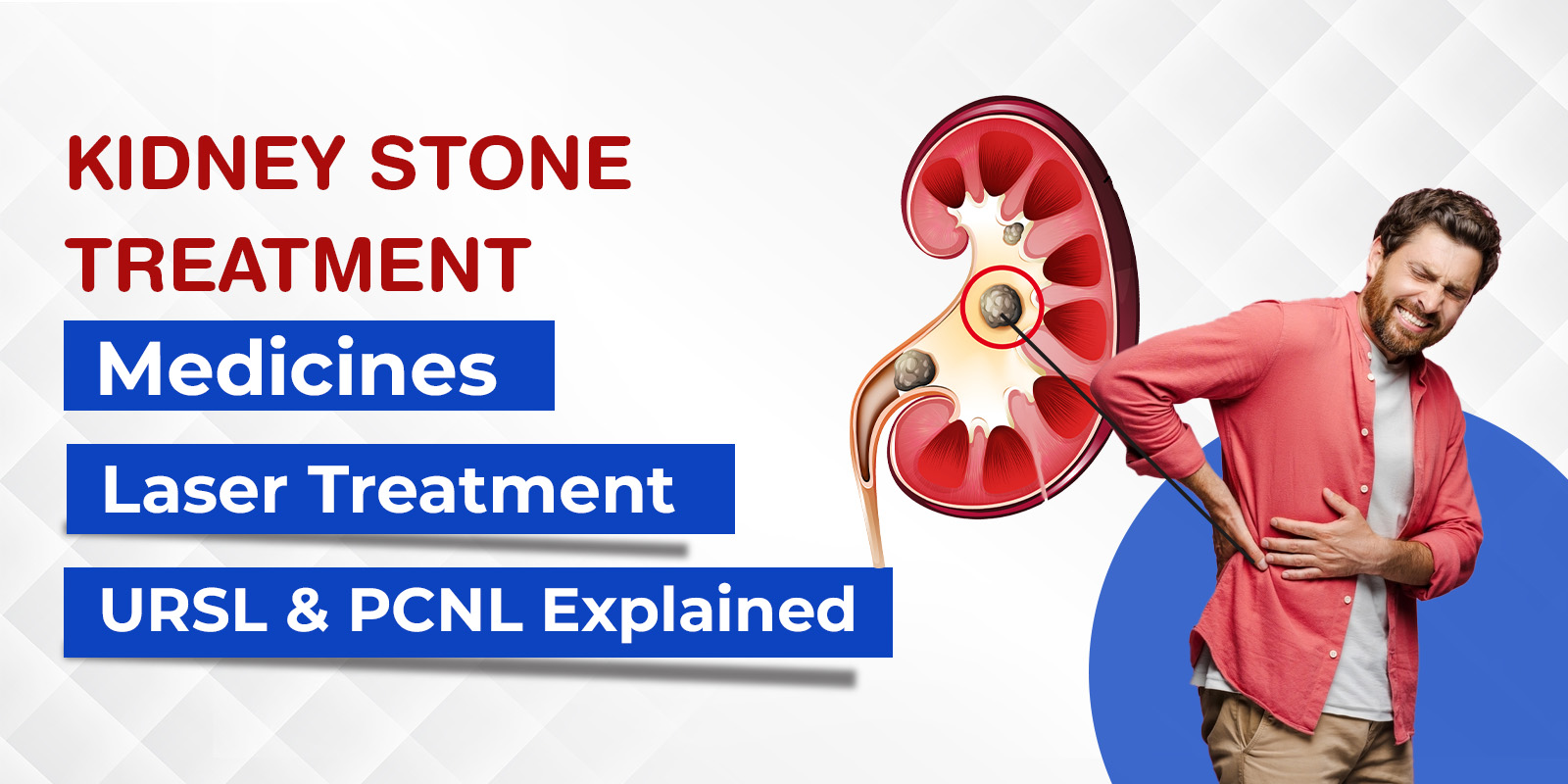
Kidney stones are hard deposits of minerals and salts that form inside the kidneys. They can cause severe pain, blood in the urine, nausea, and difficulty passing urine. While some small stones pass naturally, larger stones or those causing complications may require medical treatment or a procedure.
Choosing the right treatment depends on the stone's size, location, composition, symptoms, and the patient's overall health. Understanding the available options can help patients make informed decisions. If you are looking for Kidney Stone Treatment in LB Nagar, Hyderabad, consulting a qualified specialist can help determine the most appropriate approach for your condition.
Kidney stones form when certain minerals and substances in the urine become concentrated and crystallise. These crystals can gradually grow into stones of different sizes. Calcium oxalate stones are among the most common types, although uric acid and other types can also occur.
Common risk factors include inadequate water intake, high salt consumption, certain dietary habits, family history, previous kidney stones, and some medical conditions. Understanding the type of stone can help doctors recommend suitable treatment and prevention strategies.
Kidney stones may not cause symptoms until they move into the ureter, the tube connecting the kidney to the bladder.
Common symptoms include:
Seek medical attention if you experience these symptoms, particularly if the pain is severe or persistent.
Doctors may recommend different investigations to confirm the presence of a stone and determine its size and location.
The appropriate investigations depend on the patient's symptoms, medical history, and clinical assessment.
Treatment varies according to the stone's characteristics and whether it is causing pain, obstruction, infection, or other complications.
Small stones may pass naturally through the urinary tract. Doctors may recommend pain-relieving medication and, in selected cases, medicines such as alpha-blockers to help certain ureteral stones pass.
The decision depends on the stone's size, location, and the patient's condition. Medicines do not dissolve every type of kidney stone, and patients should not attempt to manage a suspected obstruction without medical advice.
Laser treatment uses energy delivered through a thin instrument to break stones into smaller fragments. The fragments can then be removed using specialised instruments or allowed to pass, depending on the procedure and the stone's characteristics.
Laser treatment is commonly performed during ureteroscopy and may be suitable for selected ureteral and kidney stones. The most appropriate technique depends on the stone's size and location.
URSL is a minimally invasive procedure used mainly to treat stones in the ureter. A doctor passes a thin instrument called a ureteroscope through the urinary passage into the ureter.
The stone is broken into smaller pieces, often using a laser, and fragments may be removed with specialised instruments. A temporary ureteral stent may be placed to help urine drain, depending on the clinical situation.
PCNL is a procedure commonly used for large kidney stones, including many stones larger than 2 cm and certain complex or staghorn stones.
The surgeon creates a small opening through the skin of the back into the kidney. Specialised instruments are passed through this opening to break up and remove the stone.
PCNL is generally more invasive than ureteroscopy and requires careful assessment, but it can be an appropriate option for selected large or complex stones.
Medicines may be sufficient for selected small stones that are likely to pass naturally. URSL, often using laser energy, is commonly used for ureteral stones and some kidney stones. PCNL is frequently considered for larger or complex kidney stones.
Medicines may be sufficient for selected small stones that are likely to pass naturally. URSL, often using laser energy, is commonly used for ureteral stones and some kidney stones. PCNL is frequently considered for larger or complex kidney stones.
Patients searching for the Best Urology & Endourology Hospital in Hyderabad should look for appropriate diagnostic facilities, qualified specialists, and treatment recommendations based on individual medical needs.
Recovery depends on the procedure performed and the patient's condition. Follow your doctor's instructions regarding activity, medication, follow-up appointments, and any temporary ureteral stent.
Drink enough water to maintain good hydration unless your doctor has advised fluid restriction. Reducing excess salt intake and following dietary advice based on your stone type may also help prevent recurrence. Some patients benefit from a stone analysis and additional metabolic evaluation.
Important safety note: Fever or chills with suspected kidney stones, especially alongside severe pain or difficulty passing urine, require urgent medical assessment. An obstructed urinary system with infection can become a medical emergency.
Yes. Some small stones pass naturally with appropriate monitoring and symptom management. Larger stones may require a procedure.
No. Laser treatment is useful for many stones, but the appropriate procedure depends on the stone's size, location, and complexity.
URSL accesses stones through the urinary passage, while PCNL accesses the kidney through a small opening in the back. PCNL is commonly used for larger or complex kidney stones.
Maintain adequate hydration, limit excess salt, and follow dietary recommendations based on your stone type and medical assessment.
Seek urgent care for fever or chills with suspected kidney stones, severe persistent pain, repeated vomiting, or difficulty passing urine.
Kidney stones can often be treated effectively with an approach tailored to the patient's condition. Early diagnosis helps doctors identify the stone's characteristics and recommend suitable treatment, whether medicines, URSL, laser treatment, or PCNL.
If you are experiencing kidney stone symptoms, consult a qualified specialist at Dr. Rajashekar Reddy Laparoscopy Hospital, LB Nagar, Hyderabad, to discuss your symptoms, appropriate investigations, and available treatment options.


 L. B. Nagar,
Hyderabad, Telangana 500074